The solutions 3M VHB have become a benchmark in modern industrial assembly. However, given the diversity of ranges and technical properties, choosing the right one can quickly become complex. This comprehensive guide will help you understand the differences between series, identify decisive criteria, and integrate adhesive tape converting into your assembly strategy.
To understand what 3M VHB is
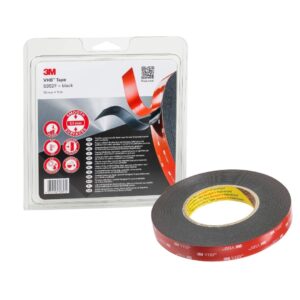
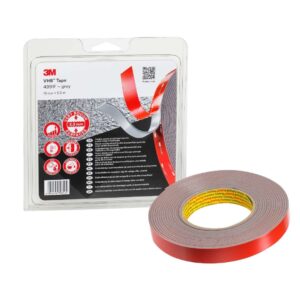
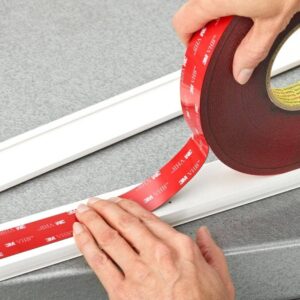
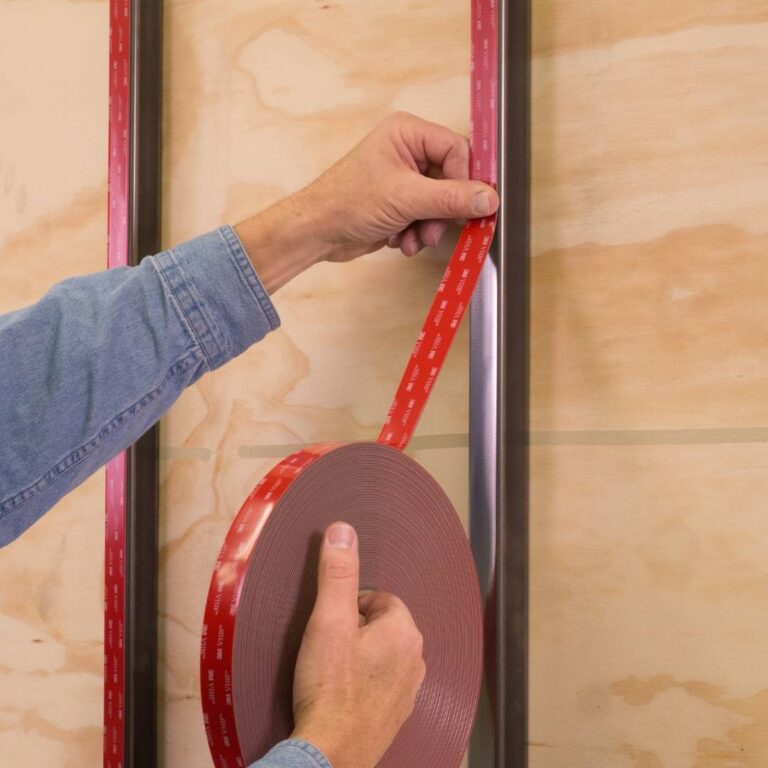
Le VHB (for Very High Bond) is a double-sided acrylic foam tape developed by 3M. It is designed to replace traditional mechanical fasteners such as screws, rivets or welds in numerous industrial applications.
Unlike conventional adhesives, 3M VHB ensures:
A uniform distribution of stresses
Vibration absorption
Permanent waterproofing
Excellent weather and UV resistance
VHB's mechanical properties make it a structural bonding solution in many sectors: industry, transport, construction, electronics, signage, and appliances.
To delve deeper into the technical principles of acrylic foams, you can consult the technical resources available on the Official website of 3M.
The main families of HBV 3M
Series 5952 – For stubborn subtractions
Excellent adhesion to low-energy plastics (PE, PP)
Good capacity for absorbing stress
Ideal for general industrial applications
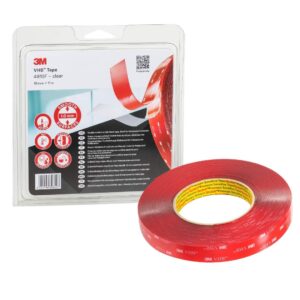
Series 4910 – Transparent
Clear tape
Suitable for glass, PMMA and translucent surfaces
Often used in displays and signage
Series 4941 – All-purpose use
Good performance on metals and paints
Light to medium structural assembly
Various industrial applications
Series 5952 – For stubborn subtractions
Greatest thickness
Ability to compensate for surface irregularities
Used in transport and construction
How to choose the right 3M VHB?
1. Identify the materials to be assembled
The first criterion is the nature of the substrates:
Metal on metal
Metal on plastic
Low-energy plastic
Glass on aluminium
Some surfaces require an adhesion promoter. 3M VHB must be selected based on the surface energy of the material.
2. Analyse des contraintes mécaniques
Ask yourself the following questions:
Static or dynamic load?
Shearing or clipping?
Vibration exposure?
A VHB used in shear on a large surface will not behave the same as in peel on a narrow surface.
3. Environmental conditions
The VHB is recognised for its resistance to UV and moisture, but it is advisable to check:
Maximum operating temperature
Chemical exposure
Thermal variation
For demanding environments, certain specific series are recommended.
4. Required thickness
The thickness of VHB plays a key role:
Tolerance compensation
Absorption of irregularities
Constraint distribution
The more irregular the surface, the thicker the foam recommended.
Respect of ramp-up time for adhesion (72 hours for maximum performance)
Avoid undue immediate constraints
Prerequisites
Always achieve:
Coat tests
Shear tests
Environmental validation
Choosing the right 3M VHB requires a structured approach: analysis of materials, mechanical constraints, operating environment and integration of adhesive tape converting. When well-selected and correctly applied, VHB constitutes a reliable alternative to traditional fastenings.
Do you have an assembly project or wish to validate an VHB reference?
Contact our technical team for a personalised study and bespoke support.
3M VHB tapes have become a benchmark in modern industrial assembly. However, given the diversity of ranges and technical properties, choosing the right reference can quickly become complex. This comprehensive guide helps you understand the differences between the series, identify the decisive criteria, and integrate tape converting [...]
In industry, mechanical assembly using screws or rivets is a historic solution. However, these methods have limitations in terms of aesthetics, corrosion, and productivity. 3M adhesive tape is now establishing itself as a credible alternative for many structural bonding applications. But can it truly replace mechanical fastening? Here is a comprehensive analysis […]
We've detected you might be speaking a different language. Do you want to change to:




 Français
  English (UK)
  Polski
  Nederlands (België)
  Deutsch
  Magyar
  Română
  Čeština