
Industrial membranes are technical materials used to ensure the critical functions of protection, watertightness and exchange regulation between a piece of equipment and its environment. They are integrated into many industrial systems to ensure the performance and durability of components.
These solutions include ventilation membranes play a central role. They make it possible to reconcile two often conflicting requirements in an industrial environment: prevent the intrusion of contaminants while allowing air exchange and pressure regulation. This role is essential for protecting enclosures, electronic equipment and systems exposed to varying conditions.
In many industrial facilities, variations in temperature, pressure or altitude generate internal imbalances. Without appropriate solutions, these phenomena can lead to condensation, mechanical stress or premature degradation of components.
Ventilation membranes make it possible to :
They provide a functional response to a recurring physical problem, without compromising the overall watertightness of the equipment.
Ventilation membranes offer a number of technical and industrial benefits:
Balance between waterproofing and breathability, essential for closed cases
Reduced risk of condensation inside equipment
Long-lasting protection against external aggression
Improving the reliability and lifespan of systems
Maintaining performance in exposed environments
These advantages make ventilation membranes key components for equipment subject to high environmental stress.
Industrial membranes, and ventilation membranes in particular, are used in many applications requiring reliable protection of equipment.
Ventilation membranes are commonly integrated into enclosures to protect internal components while managing air and pressure exchange.
In electronic systems, membranes help to protect against humidity, particles and environmental stresses, while preserving the operation of components.
Industrial equipment installed in constrained environments (climatic variations, dust, projections) requires robust and durable protection solutions.
Ventilation membranes are also used to secure equipment integrated into systems subject to variable mechanical and environmental stress.
Certain constraints make the integration of a ventilation membrane essential for the reliability of industrial equipment.
Industrial membranes can be selected according to functional constraints and integration requirements.
Designed to enable breathability while ensuring protective barrier, They are used to regulate pressure and protect closed equipment.
These membranes combine protection against contaminants with gas exchange capacity, meeting the requirements of sensitive systems.
Used when the priority is to protect equipment from its environment, without direct exchange with the outside world.
ADDEV Materials supports its industrial customers by offering converting capacities adapted to membranes, to facilitate their integration into systems.
Membranes can be transformed by :
These operations enable us to deliver ready-to-use membranes that are compatible with industrial requirements and assembly constraints.

ADDEV Materials is positioned as a technical partner for projects involving industrial and ventilation membranes.
This approach is based on :
The aim is to offer reliable, integrable and sustainable solutions that go beyond simply supplying materials.
Do you need case protectionof pressure management or controlled ventilation for your industrial equipment?
The ADDEV Materials teams will work with you to define a the right industrial membrane solution to your technical constraints.
An industrial ventilation membrane regulates the internal pressure of equipment while preventing the intrusion of contaminants such as water, dust or particles.
Variations in temperature or environment can cause pressure imbalances. Without a suitable solution, this can lead to condensation, mechanical stress or damage to internal components.
A waterproof membrane completely blocks exchanges, while a waterproof and breathable membrane allows air exchanges while retaining its protective function against the outside environment.
When the equipment is subject to variations in pressure or temperature, a ventilation membrane is more suitable than a static seal, which cannot regulate the air.
Yes, by balancing the pressure, the ventilation membranes help to limit condensation inside the enclosures.
Yes, they are designed to protect equipment in environments subject to external stresses, provided they are chosen to suit the application.
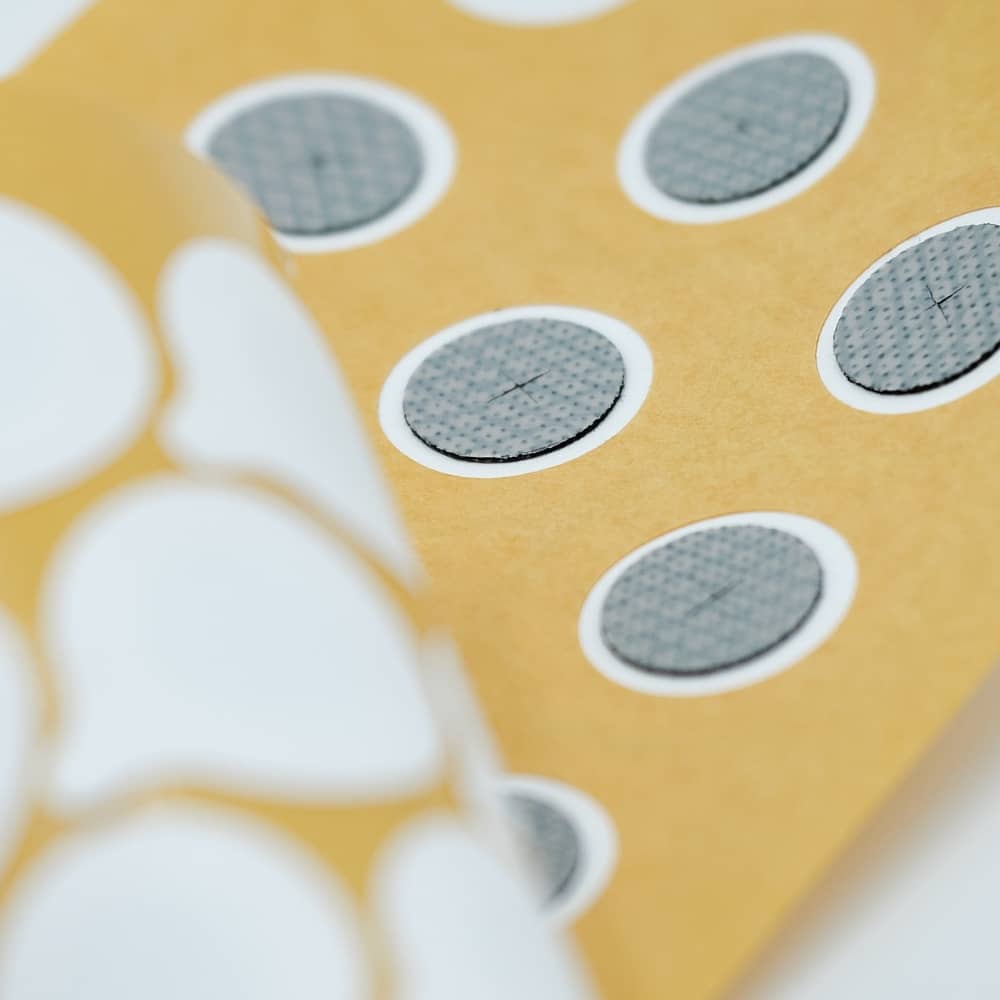
Yes, the membranes can be cut and shaped to be integrated in the form of discs or specific formats, depending on assembly constraints.
Ideally at the design stage, to ensure optimum integration and avoid reliability or non-quality issues downstream.
Yes, unlike temporary solutions, a ventilation membrane is integrated as a durable functional component of the equipment.
Yes, ADDEV Materials supports projects from the needs analysis phase onwards, in order to propose a suitable foam solution, both in terms of the choice of material and the processing capabilities required for industrial integration.
 Français Français
  English (UK)
  Polski
  Nederlands (België)
  Deutsch
  Magyar
  Română
  Čeština Français Français English (UK)
Polski
Nederlands (België)
Deutsch
Magyar
Română
Čeština
Čeština Français Français English (UK)
Polski
Nederlands (België)
Deutsch
Magyar
Română
Čeština