
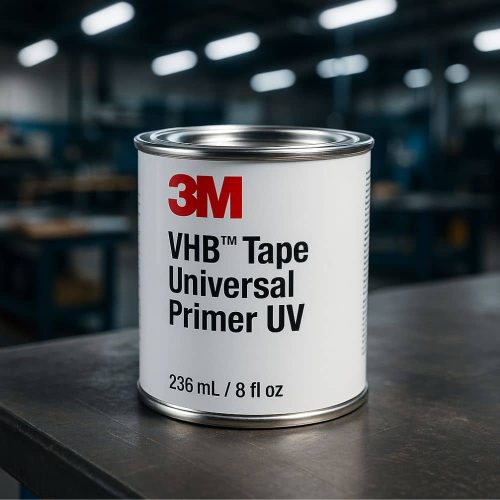
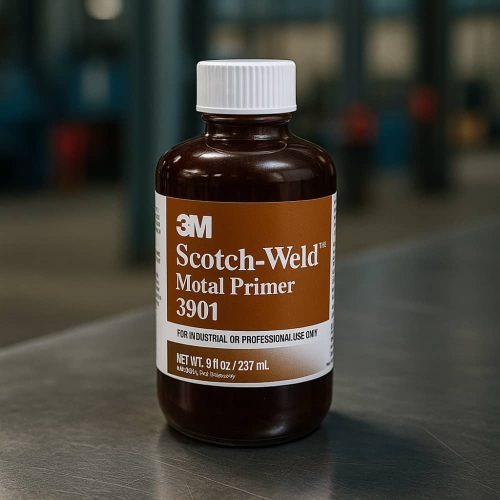
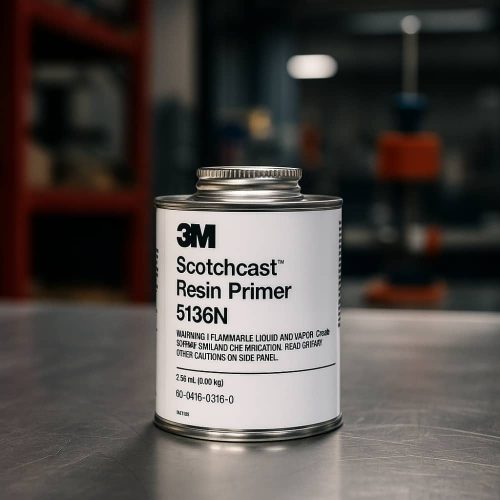


Primer: maximise the adhesion of your products

What is a primer?

A adhesion primer is a liquid solution based on a resin, a wetting agent or an adhesion promoter, applied to a surface before the use of an sealant, adhesive, resin or coating. 
Its role is to strengthening support between the substrate and the assembly or finishing product in improving chemical compatibility and mechanical anchorage. 

Essential for certain difficult surfaces (glass, aluminium, plastic, concrete, tiles, etc.), primer is used in a variety of sectors: industry, construction, automotive, rail, aeronautics, electronics, packaging... 

It guarantees sustainable assembly performancelimits delamination and enables comply with mechanical, climatic and fire-smoke resistance standards. 

Advantages of primers

The use of a adhesion primer is an essential step in guaranteeing optimal, long-lasting adhesion between a substrate and an assembly product (adhesive, mastic, resin). It plays a strategic role in many demanding industrial applications: 

  • Strengthening membership on difficult materials (plastics, smooth metals, glass, concrete) 
  • Improved chemical compatibility between the substrate and the adhesive or sealant 
  • Securing structural assemblies avoids detachment in the medium/long term 
  • Preventing rising damp or dirt that compromises adhesion 
  • Reducing trade-ins in production or on site thanks to enhanced reliability 
  • Optimising durability in harsh environments UV, rain, salt, vibrations, heat 
  • Increased performance on non-porous or non-absorbent substrates 
  • Technical support to ensure compliance with standards UL94, EN 45545, ISO 11600, etc. 

The primer is a invisible but essential quality assurancewhich guarantees sustainability, safety and compliance for your bonding and sealing operations. 

The adhesion primers are used in many industrial sectors to guarantee the reliability of adhesives, sealants or coatingsThis is particularly true in complex conditions (closed substrates, damp environments, incompatible substrates, etc.). Here are the main applications: 

Building and construction industry 

  • Preparing non-porous or damp substrates before applying sealants (joinery, façades, roofing) 
  • Treatment of concrete or tiled expansion joints before PU or MS polymer sealant 
  • Gluing cladding panels, skirting boards, thresholds or tiles with two-component adhesives 

Transport: automotive, rail, aeronautics 

  • Improved adhesion on composites, thermoplastics or painted metals 
  • Surface preparation before structural bonding (epoxy, methacrylate) in body modules or technical enclosures 
  • Securing invisible bonds subject to vibratory or climatic stresses 

Electronics, energy, telecoms 

  • Encapsulation of sensitive components printed circuits, relays, sensors, enclosures 
  • Surface preparation before potting with epoxy or PU resins 
  • Improved adhesion on heat-sensitive or composite substrates 

Heavy industry, mechanical engineering and infrastructure 

  • Waterproofing and bonding on concrete, metal, rigid PVC or mineral fibres 
  • Preparation of pipes, tank joints, fittings and technical collars 
  • Applications in aggressive environments: salt spray, heat, dust, vibration, etc. 

Whatever the application, the bonding primer ensures improved mechanical strength and durabilityin particular on critical or heterogeneous media. 

Primer for two-component adhesives: secure your complex assemblies 

The application of a primer for two-component adhesive (epoxy, methacrylate, polyurethane) is essential for : 

  • Improved adhesion on difficult or low-porosity substrates 
  • Avoid premature ageing of the adhesive interface 
  • Reduce the effects of withdrawal or internal tension 
  • Improve long-term performance in extreme conditions (temperature, humidity, chemicals) 

For example, on anodised aluminium, stainless steel, engineering plastics (PA, PE, PP), polyesterPrimary schooling is a guarantee of structural safety. 


Primer for sealants: optimising waterproofing adhesion 

Le putty primer is often essential in the case of expansion, sealing or caulking jointsincluding : 

  • Smooth or sandblasted concrete 
  • Tiles, glass, rigid PVC 
  • Damp or outdoor surfaces (façades, roofs, joinery) 
  • Non-porous or incompatible materials without prior treatment 

It allows you toavoid loss of membershipwater seepage and cracks caused by movement of the substrate. 

Polyurethane, MS polymer and silicone sealants often benefit from a special dedicated primarycompatible with their chemistry. 


Primer for non-porous surfaces: an ally for smooth plastics and metals 

Some materials, such as polypropylene (PP)the polyethylene (PE)the PVCthe glassor anodised metals present few natural anchors for adhesives or sealants. 
Le primer for non-porous surfaces acts as active interfaceby creating a chemically compatible adhesion layer between the substrate and the applied product. 

  • It may contain membership promoters (silane, titanate...) 
  • It improves performance on smooth, non-absorbent or non-polar surfaces 
  • It enables bonding without prior sanding or blasting 

It is commonly used in the plastics, glazing, high-speed maintenance and automotive sectors. 


Polyurethane (PU) primer: for flexible adhesives and sealants 

The PU primary are specifically formulated to encourage the support of polyurethane adhesives and PU sealantswho need a stable, controlled membership environment. 

  • Good compatibility with porous materials (concrete, wood, mortar) 
  • Fast drying: ideal for high production rates 
  • Anti-dust formulations, sometimes pigmented for visualization 
  • High resistance to water and expansion cycles 

They are found in joints in facades, roads, cladding and external joinery. 


Primer for epoxy or methacrylate resin: anchoring and chemical barrier 

Some adhesion primers are designed for potting, encapsulation or casting resinsincluding epoxy or methacrylate resins used in : 

  • Electronics (PCBs, transformers, sensors, relays, etc.) 
  • Construction (crack injection, chemical sealing) 
  • Structural assembly (composite, concrete, stone, metal) 

They enable : 

  • From block rising damp in porous substrates 
  • From create a cling film compatible with polymerisation 
  • From limit the formation of bubbles or craters casting 

These primaries are often solvent- or water-basedThey require a precise drying time before the resin is applied. 

As a multi-technology expert, ADDEV Materials to help you selection, integration and optimisation of your primaries according to your process: 

  • Technical advice depending on the material, the adhesive/mastic used and the installation environment 
  • Compatible primers with our full range of adhesives 
  • Available stock in industrial formats for testing or production 
  • Training, tests, on-site trials for product validation 
  • Regulatory and quality supportfull documentation 

We can help you to secure your assemblies, reduce trade-insand guarantee the longevity of your bonds and seals over time. 

📞 Contact our ADDEV Materials experts as of now for a technical recommendationa sample of primer adapted to your substrateor a quick quotation. 

Our strategic suppliers of bonding primers

FAQ - Primer

This is a liquid product applied before glue, putty or resin to improve adhesion to the substrate. It acts as a chemical or mechanical interfaceespecially on difficult or smooth surfaces. 

On substrates such as PVC, anodised aluminium, smooth concrete, glass, compositesor when conditions are wet or critical. Recommended for guarantee long-lasting hold. 

No. You need to use a primary compatible with the chemistry of your adhesive or sealant (PU, MS, epoxy, etc.). Incompatibility can cause premature detachment or a poor polymerisation. 

Yes. It allows you to resistant to weather, thermal cycles and humidityand prevent loss of membership over time. 

Yes. There are water-based, low-VOC or solvent-free primersadapted to sensitive environments or strict HSE regulations.