Industrial foams are technical materials widely used in B2B environments to meet functional requirements such as assembly, protection, sealing, cushioning and insulation. Thanks to their specific structure and the diversity of materials available, they can be integrated into many industrial systems as components in their own right.
In contrast to rigid or purely mechanical solutions, industrial foams provide a high degree of flexibility. functional flexibility, They can be adapted to tolerances and respond effectively to mechanical, thermal or acoustic constraints. They are used both in the design phase and to optimise existing products.
At ADDEV Materials, industrial foams are selected and processed to meet real application requirements, with a focus on performance, reliability and industrial repeatability.
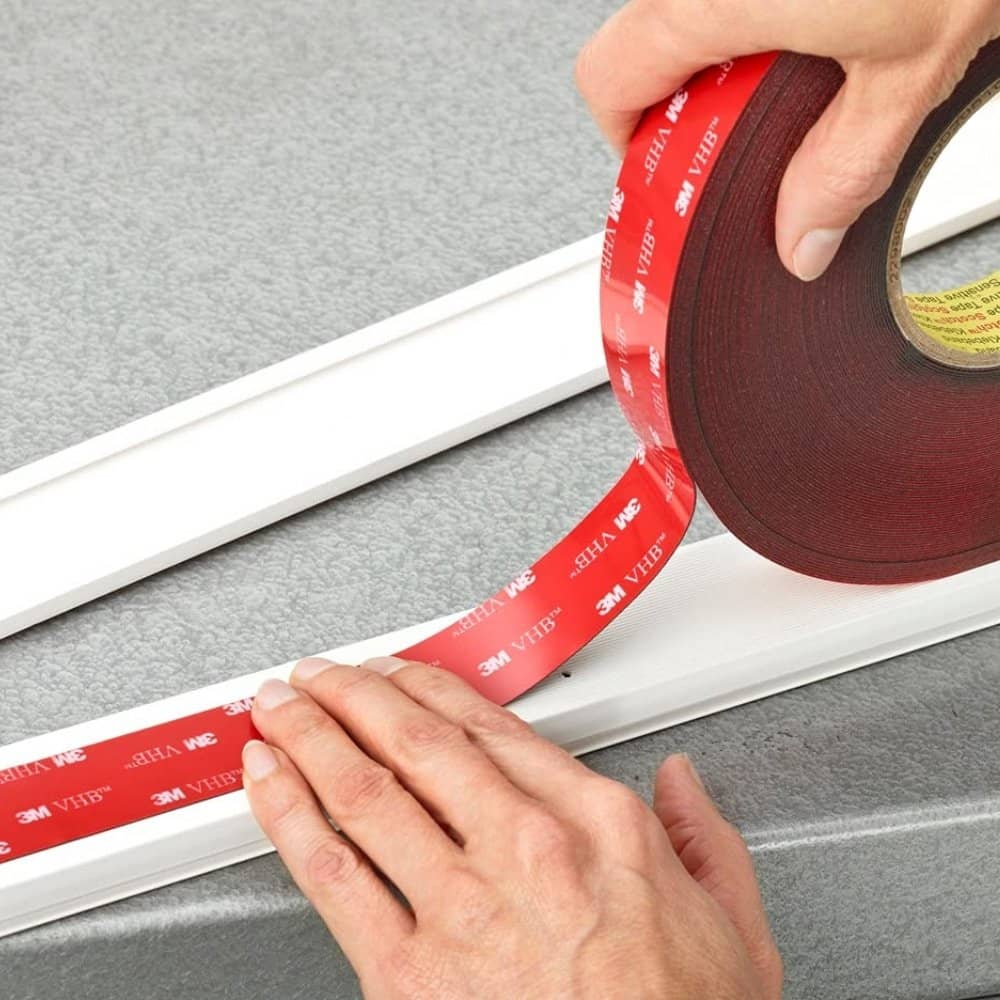
Industrial foams perform a number of essential functions in technical products and equipment.
They are frequently used to assemble or hold components, temporarily or permanently, without damaging the substrates. Their ability to deform means they can compensate for surface irregularities and improve the quality of assemblies.
Foams are also used for mechanical protection sensitive parts. They absorb shocks, reduce vibrations and help to extend the life of equipment.
In’sealing and jointing, They can be used to create effective interfaces against air, moisture or certain contaminants, while adapting to play and dimensional constraints.
Lastly, some industrial foams are used for the following functions’sound insulation, This helps to reduce noise and improve the acoustic comfort of systems.
Depending on their material, structure and processing, industrial foams can fulfil several key functions:
Permanent or non-permanent assembly of components
Wedging and holding parts
Protection against shock and vibration
Sealing and jointing
Sound insulation
Compensation for mechanical tolerances
These functions can be combined within a single application, making industrial foams particularly versatile solutions in technical environments.
You are concerned if :
your parts must be protected against shock or vibration
you must ensure wedging or insulation in an industrial complex
you are looking for compensate for mechanical games
foam must adapt to specific forms
In these cases, industrial foams are commonly used as functional solutions, integrated directly into the process.
To respond effectively to industrial needs, it is essential to distinguish between two main categories of foam, depending on how they are used.
Your needs are closer to :
An assembly or fixing → adhesive foam
Cushioning, protection or insulation → non-adhesive foam
Tailor-made integration → foam transformed according to your geometry
The choice depends on the expected role of the foam and the constraints of integrating it into your process.
The industrial foams offered by ADDEV Materials cover different families of materials, selected according to use and application constraints.
These include PVC, polyethylene (PE), polyurethane (PU), EPDM, silicone, neoprene, vinyl and acrylic foams. Each material has its own specific characteristics in terms of compressibility, mechanical strength, environmental resistance and conformability.
The choice of material always depends on the end application and must be considered in relation to the functional requirements of the project.
The performance of industrial foam depends not only on the material used, but also on the way it is used. transformation.
ADDEV Materials has dedicated converting capabilities for industrial foams, enabling each solution to be tailored to the actual constraints of customer applications. These transformations include cutting (rotary, laser, digital or on press), slitting, splitting and slashing.
This made-to-measure approach means we can deliver ready-to-integrate foams, with dimensions, shapes and tolerances adapted to industrial processes.
At ADDEV Materials, industrial foams are approached as functional solutions, and not simply as product references. Our teams support projects from the needs analysis stage onwards, guiding them towards the most suitable type of foam, material and processing method.
This approach enables us to secure the expected performance, optimise industrial integration and meet long-term reliability requirements.
Depending on your application, it is possible to delve deeper into more specific solutions:
These two families are the subject of dedicated pages, providing more detailed information on their uses, advantages and conversion possibilities.
Industrial foam is a technical material used for functions such as assembly, protection, sealing, cushioning or insulation. It is chosen according to its material, structure and behaviour in the face of mechanical, environmental or acoustic stresses.
An industrial adhesive foam incorporates a fixing function thanks to an adhesive surface and is mainly used for assembly or jointing applications.
Non-adhesive foam is used without an integrated adhesive bond, in particular for cushioning, protection or insulation, when fixing is not necessary or is achieved by other means.
Industrial foams are used in a wide range of B2B sectors, including manufacturing, electronics, technical equipment, transport, energy and mechanical systems requiring protection, waterproofing or stress absorption.
The choice mainly depends on the function required (assembly, protection, sealing, insulation), mechanical and environmental constraints, and the way in which the product is to be integrated. A technical analysis will help to select the most appropriate material and processing.
Yes, some industrial foams can combine several functions, such as vibration absorption and sealing, or mechanical protection and cushioning. This versatility depends on the type of foam and how it is processed.
Yes, industrial foams can be transformed according to precise specifications to adapt to the geometric and functional constraints of applications. Cutting, slicing, slitting or slotting operations can be used to obtain formats suitable for industrial integration.
Some industrial foams are designed to withstand specific constraints such as humidity, temperature variations, mechanical stress or demanding technical environments. The choice of material is crucial.
Yes, in some cases, industrial foam is used solely as a functional element (cushioning, damping, insulation), while assembly is carried out by another process. The choice depends on the intended role of the foam in the application.
A specialist in industrial foams provides expertise in the choice of materials, their transformation and their integration into industrial processes. This helps to guarantee performance, optimise installation and adapt the solution to the actual constraints of the project.
Yes, ADDEV Materials supports projects from the needs analysis phase onwards, in order to propose a suitable foam solution, both in terms of the choice of material and the processing capabilities required for industrial integration.
Do you have a project that requires industrial foam adapted to your technical constraints?
The ADDEV Materials teams will work with you to define the most appropriate solution, from the choice of material to custom processing.
 Français Français
  English (UK)
  Polski
  Nederlands (België)
  Deutsch
  Magyar
  Română
  Čeština Français Français English (UK)
Polski
Nederlands (België)
Deutsch
Magyar
Română
Čeština
Čeština Français Français English (UK)
Polski
Nederlands (België)
Deutsch
Magyar
Română
Čeština