Heat shrink: protecting cables from heat

The heat shrink tubing is a solution designed to protect electrical cables and components from high temperatures, thermal variations and demanding industrial environments. It ensures the durability, safety and performance of electrical systems, even in extreme conditions.

Used in the energy, data centre, electric automotive and rail sectors, it contributes to reduce the risks of thermal degradation and prolong the lifespan of installations.

At ADDEV Materials, we support manufacturers in the selection and integration of appropriate thermal protection solutions, with the support of recognised partners.

Request a quote for thermal insulation

Heat shrink

Heat shrink tubing for industrial applications

In industrial environments, heat shrink tubing allows for:

  • to protect the electrical cables
  • to limit the effects of the heat
  • to secure the facilities
  • to improve system reliability

It is indispensable in high-thermal-stress environments.

Comparison:

  • heat shield
  • flame retardant sheeting
  • heat shrink tubing → snug protection
  • all-purpose protective sleeve

Each solution addresses a specific constraint.

What is heat shrink

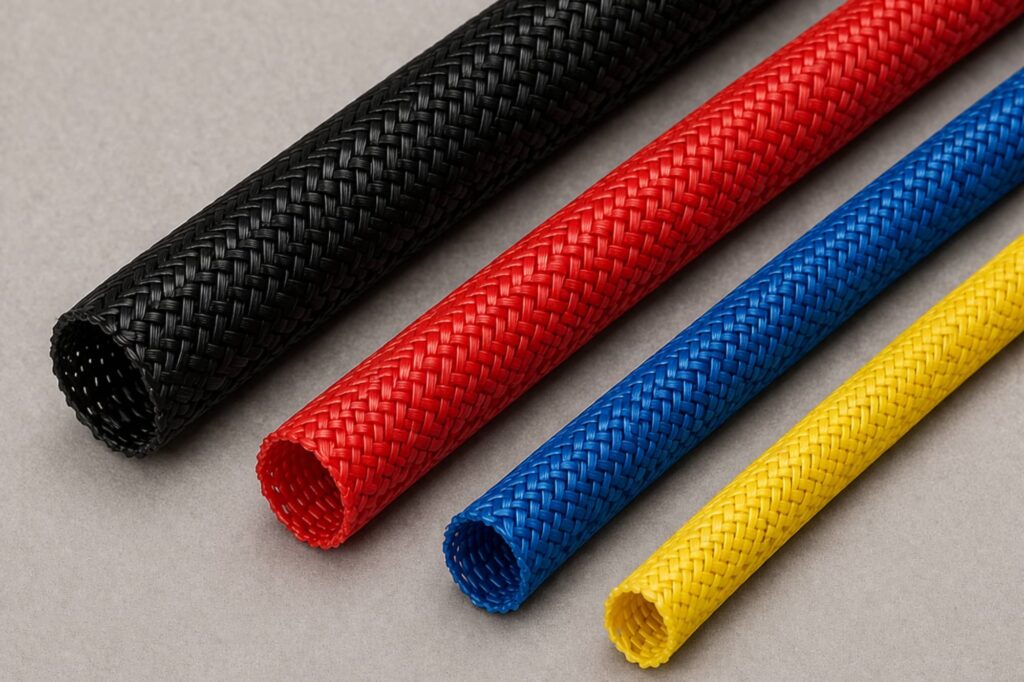
The thermal sheath is a technical sheath designed to protect cables from:

  • excessive heat
  • temperature variations
  • prolonged thermal constraints

It is made from durable materials such as:

  • Silicone
  • fibreglass
  • high-temperature polymers

It represents a key solution for thermally constrained environments.

Thermal wrapping versus other solutions: What's the difference?

Heat shrink tubing vs fire-resistant sleeving

  • thermal → heat protection
  • flame retardant

Heat shrink tubing vs. heat shrink wrap

  • Thermal → Continuous protection
  • thermo → localised protection

Thermal ducting vs standard ducting

  • thermal → high-performance
  • standard → usage courant

In a nutshell

  • Choose one heat gain for a heat protection and thermal stress
  • prioritise other conduits according to specific constraints
Heat shrink

Industrial applications of heat pipes

High-temperature environments

  • Heat protection
  • thermal resistance

Energy

  • Protection of facilities
  • Reliability of systems

Data centres

  • thermal management
  • cable protection

Automotive and electric mobility

  • Battery protection
  • System security

Rail

  • thermal resistance
  • sustainability

Les gaines thermiques sont utilisées dans un large éventail de marchés industriels, notamment : * **Automobile :** Pour protéger les faisceaux de câbles, les conduites de carburant, les flexibles et les composants du moteur contre la chaleur et l'abrasion. * **Aérospatiale :** Pour isoler les câblages, les conduites hydrauliques et les composants dans les environnements à haute température des avions et des engins spatiaux. * **Électronique :** Pour la protection des câbles et des composants contre la chaleur générée par le fonctionnement des équipements électroniques, notamment dans les produits de consommation et les équipements industriels. * **Industrie médicale :** Pour protéger les câbles et les tubes de certains équipements médicaux de la chaleur et pour garantir la stérilité. * **Pétrole et gaz :** Pour la protection des câbles, des conduites et des composants dans les environnements difficiles et à haute température des plates-formes offshore et des installations de raffinage. * **Production d'énergie :** Pour isoler les câbles et les tuyaux dans les centrales électriques, y compris les centrales nucléaires, thermiques et à énergies renouvelables. * **Automatisation industrielle :** Pour protéger les câblages et les flexibles des robots, des machines et des systèmes de contrôle dans les usines. * **Transport ferroviaire :** Pour protéger les câbles et les composants de la chaleur et des vibrations dans les trains et les locomotives. * **Chauffage, ventilation et climatisation (CVC) :** Pour isoler les conduites et les câblages dans les systèmes CVC afin d'améliorer l'efficacité énergétique et de réduire les pertes de chaleur. * **Fabrication générale :** Dans de nombreuses autres applications de fabrication où la gestion de la chaleur et la protection des câbles sont nécessaires.

La heat gain is used in:

How to choose the right heat shrink tubing

The choice depends on :

Maximum temperature

The choice depends on :

  • serving temperature
  • thermal images

Critique de la performance.

2. Type of material

As required:

  • silicone → flexibility + thermal
  • fibre de verre → haute résistance
  • polymers → specific solutions

To be adapted according to the application.

3. Environmental constraints

To consider:

  • humidity
  • chemicals
  • abrasion

Ensures durability.

4. Standards and requirements

To check:

  • Industry standards
  • sectoral constraints

Ensures compliance.

Our partners in thermal ducting

We work with partners recognised for their technical expertise:

Systems Protection logo
SES STERLING
DSG Canusa logo

Pourquoi choisir ADDEV pour vos gaines

Expertise in the protection of electrical systems

Technical support

Large portfolio of solutions

Performance-oriented approach

International presence

We help you improve the reliability and compliance of your systems.

Need thermal sleeving for your application

Each application requires a specific solution.

Our experts can help you with :

  • Identify the appropriate sheath
  • optimise your design
  • secure your performance

Get a quote for a duct
Speak to an expert 

Quick response – Dedicated technical support – Tailored solution

FAQ – heat shrink tubing

This is a sleeve designed to protect cables from heat.

Elle protège les câbles contre les températures élevées.

According to the temperature and environment.

The heat shrinkable tubing protects against heat, while the fire-retardant tubing protects against flames.

Yes, it is designed for industrial environments.

Silicone, fibreglass, high-performance polymers.

Analysing thermal and environmental constraints.