Laminating technical films for industry

Lamination of technical films enables the combination of several materials to create multi-layer structures suited to the demands of industrial applications.

At ADDEV Materials, this conversion process is used to produce complex technical films for the energy, electronics and mobility sectors. Laminating enables manufacturers to combine the properties of several materials into a single solution.

The complex films developed by ADDEV Materials are used in particular in :

Complexing

Energy

Electronics

Data centres

Energy storage

Rail

Electric Vehicle

What is technical film lamination?

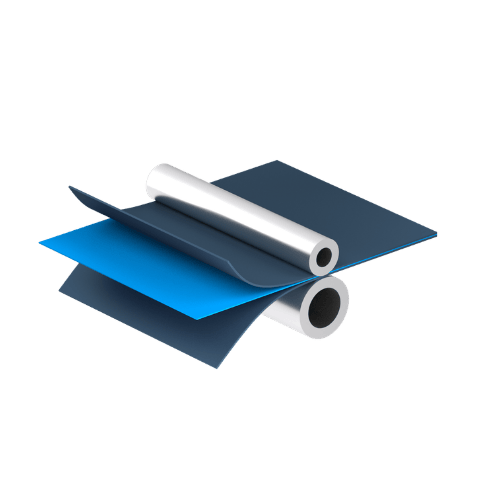
Complexing, also known as multi-layer lamination, involves bonding several films or materials together to create a functional structure.

This process produces a material with specific properties.

For example:

  • electrical insulation

  • thermal resistance

  • mechanical protection

  • dimensional stability

In this way, manufacturers can develop solutions tailored to the constraints of their systems.

Complexing

Lamination applied to technical films

Lamination can be carried out on various technical films used in industry.

Among the materials frequently combined:

  • PET (polyethylene terephthalate) polyester film

  • PEN films (polyethylene naphthalate)

  • polyimide films

  • fluoropolymer films (PTFE, FEP, PFA, ETFE)

  • polycarbonate films

  • polyolefin films

Each material has its own specific characteristics. As a result, complexing can be used to create structures tailored to industrial applications.

Complexing applications in the energy and mobility industries

Complexing enables the development of technical films used in various industrial systems.

Energy storage

Multilayer films can be used in systems requiring insulation and protection.


Data centres

Complex materials can contribute to thermal management and electrical insulation.

Electric Vehicle

Complexing makes it possible to combine several technical properties in a single material.


Industrial electronics

Complex films can be used to protect electronic components.


Rail

Multilayer materials can meet the mechanical and thermal constraints of rail systems.

Complexing applications in the energy and mobility industries

Complexing offers a number of benefits for industrial applications.

Combination of properties

Several materials can be assembled to create a specific technical solution.

Optimising performance

The final material can incorporate several functions.

Adaptation to industrial systems

Complex films can be integrated into various types of equipment.

Design flexibility

Complexing allows the structure of the materials to be adapted to the constraints of the project.

Complexing and materials expertise at ADDEV Materials

ADDEV Materials combines expertise in materials and converting processes to support manufacturers with their projects.

Our teams are particularly active in :

  • selection of technical films

  • the design of multi-layer structures

  • optimising transformation processes

  • industrialisation of materials

This approach allows for the development of solutions adapted to energy and mobility applications.

Need a laminating solution for your technical films?

Industrial systems often require materials capable of combining several properties.

The teams at ADDEV Materials support manufacturers in the design and processing of multi-layer technical films for use in the energy, electronics and mobility sectors.

FAQ - Industrial complexing

Complexing involves assembling several films to create a multilayer structure with specific technical properties.

A wide range of technical films can be assembled, including PET, PEN, polyimide, fluoropolymer and polycarbonate films.

Complexing makes it possible to combine several properties in a single material.

Yes, ADDEV Materials supports manufacturers in the design and processing of multilayer technical films.