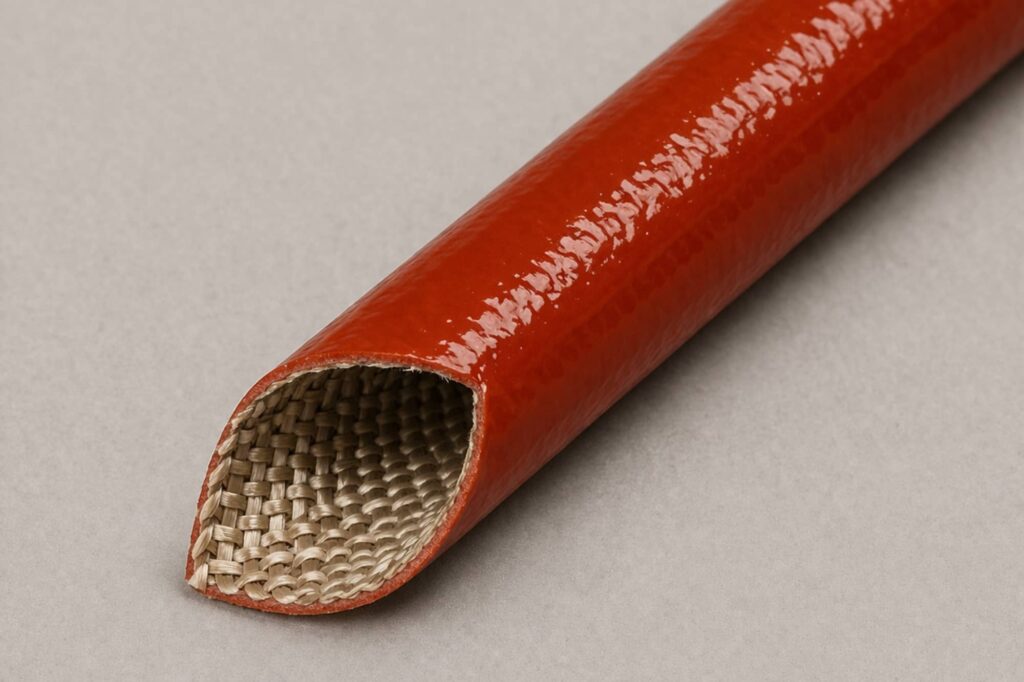
Fire-resistant sheathing is a technical solution designed to protect electrical cables and components against high temperatures, flames and critical environments. It plays a vital role in securing industrial facilities by ensuring a Thermal and mechanical protection, and fire resistance in compliance with the strictest requirements.
Used in sectors such as rail, energy and automotive, fire-resistant conduit ensures service continuity and system security in the event of exposure to extreme conditions.
At ADDEV Materials, we support manufacturers in the selection and integration of appropriate thermal protection solutions, with a portfolio of technical sleeves from recognised manufacturers.
In industry, fire-resistant sheathing is used for:
It is indispensable in environments with high security requirements.
Comparison:
The fire-resistant casing is designed for critical environments.
The fire-resistant duct is a technical duct designed to withstand high temperatures and protect cables against:
It is generally made of high-performance materials such as:
It offers a key solution for fire risk environments.
La fire sleeve is used in:
The choice depends on :
Security review.
As required:
To be adapted according to the application.
To consider:
Ensures durability.
To check:
Ensures compliance.
We work with partners recognised for their technical expertise:
Expertise in the protection of electrical systems
Technical support
Large portfolio of solutions
Performance-oriented approach
International presence
We help you to secure your facilities and improve their reliability.
Each application requires a specific solution.
Our experts can help you with :
Get a quote for a duct
Speak to an expert
Quick response – Dedicated technical support – Tailored solution
This is a sheath designed to resist flames and high temperatures.
It protects cables from fire and heat.
According to the temperature, the environment and the standards.
It depends on the material, often very high.
Yes, it is designed for critical industrial environments.
The fire-resistant sheath protects against flames, not just heat.
Yes, particularly in railways and energy.
By analysing the thermal and regulatory constraints.