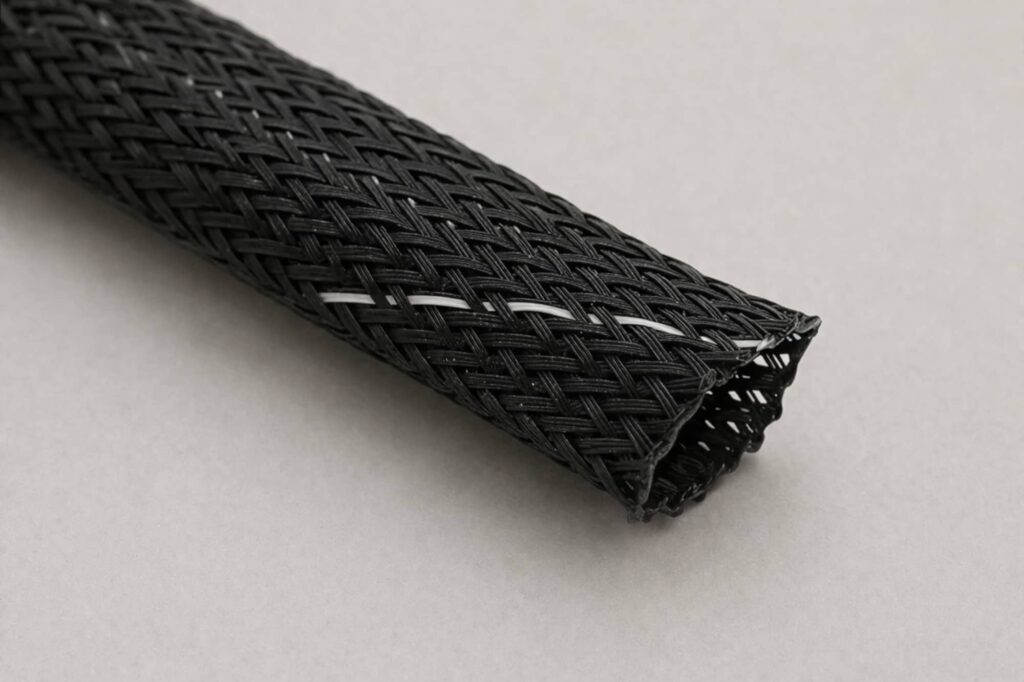
Electrical conduit: protection and insulation for industrial cables

The electrical conduit is an essential solution for ensuring the protection, insulation and durability of electrical cables and harnesses in industrial environments. It allows for the securing of installations by protecting components against mechanical, thermal and environmental stresses.

Used in the energy, rail, automotive and industrial sectors, electrical conduit plays a key role in Reliability and longevity of electrical systems.

At ADDEV Materials, we support manufacturers in the selection and integration of cable protection solutions suited to their technical constraints, thanks to a wide range of technical ducts.

Request a quote for an electrical conduit

Electrical conduit

Electrical conduit for industrial applications

In industrial environments, electrical conduit is used for:

  • protect cables and harnesses
  • secure electrical connections
  • extend the lifespan of installations
  • ensure compliance with standards

It is particularly suited to constrained environments.

Compared to other solutions:

  • electrical conduit → overall protection
  • insulating tape
  • heat shrink tubing → specific and fitted protection
  • braided sleeve → mechanical protection

The electrical conduit is a versatile solution.

What is an electrical conduit

The electrical conduit is a protective device designed to enclose cables or harnesses to ensure their insulation, mechanical protection and resistance to aggressive environments.

Its main functions:

  • Electrical insulation of conductors
  • protection against abrasion and impact
  • high-temperature resistance
  • Organisation of beams

It is an essential component for securing electrical systems.

Electrical trunking versus other solutions: What's the difference?

Electrical conduit vs heat shrink tubing

  • electric gain → generic and versatile solution
  • heat shrink → specific and fitted protection

Electrical conduit vs braided sleeving

  • electrical conduit → insulation + protection
  • braided → mechanical protection

Electrical tape vs insulation tape

  • sustainable solution
  • temporary fix

In a nutshell

  • Choose one Electrical conduit for a Global and sustainable cable protection
  • Prioritise specific solutions according to the constraints
electric sleeve

Industrial applications of electrical conduits

Cable protection

  • Conductor insulation
  • Securing of beams

Energy

  • electrical installation protection
  • Reliability of systems

Rail

  • vibration resistance
  • sustainability

Automotive and electric mobility

  • Cable protection
  • Systems optimisation

General industry

  • Cable protection and organisation

Les gaines électriques sont utilisées dans de nombreux marchés industriels, notamment : * **La construction :** pour le câblage de bâtiments résidentiels, commerciaux et industriels, y compris les hôpitaux, les écoles et les centres de données. * **L'industrie manufacturière :** pour la protection des câbles dans les usines de production, les chaînes d'assemblage et les machines industrielles. * **Les infrastructures :** pour le câblage des ponts, des tunnels, des systèmes ferroviaires, des aéroports et des centrales électriques. * **Le secteur de l'énergie :** pour le câblage des installations pétrolières et gazières, des parcs éoliens et des centrales solaires. * **Les technologies de l'information et de la communication (TIC) :** pour le câblage des centres de données, des réseaux de télécommunications et des installations de serveurs. * **Le transport :** pour le câblage des véhicules, y compris les automobiles, les trains et les navires. * **Le secteur de la santé :** pour le câblage des équipements médicaux et des installations hospitalières, où la sécurité et la fiabilité sont primordiales. * **Les environnements dangereux :** dans les zones où il y a un risque d'explosion, d'incendie ou de corrosion, des gaines spécialisées sont utilisées pour protéger les câbles et assurer la sécurité.

La Electrical conduit is used in:

How to choose the right electrical conduit

The choice depends on :

1. Type of sheath

The choice depends on the application:

  • heat-shrinkable → snug fit
  • braided → flexibility
  • structural protection

Critique de la performance.

2. Environmental constraints

To be taken into account:

  • temperature
  • humidity
  • chemicals

Essential for sustainability.

3. Mechanical and thermal resistance

The material must:

  • to resist shocks
  • to withstand temperatures

Important for reliability.

4. Industrial standards and constraints

To check:

  • UL standards
  • sector-specific requirements

Ensures compliance.

Our partners in electrical conduits

We work with partners recognised for their technical expertise:

Systems Protection logo
SES STERLING
DSG Canusa logo

Pourquoi choisir ADDEV pour vos gaines

Expertise in the protection of electrical systems

Technical support

Large portfolio of solutions

Performance-oriented approach

International presence

We help you improve the reliability and durability of your installations.

Need electrical conduits for your application

Each application requires a specific solution.

Our experts can help you with :

  • Identify the appropriate sheath
  • optimise your design
  • secure your performance

Get a quote for a duct
Speak to an expert 

Quick response – Dedicated technical support – Tailored solution

FAQ – Electrical Conduit

This is a protection intended to insulate and protect cables.

It serves to protect cables from mechanical and environmental stresses.

The choice depends on the environment, the type of cable, and the constraints.

The heat shrink tubing provides protection and insulation, while the braided sleeving offers mechanical protection.

A sheath resistant to temperature, shock and chemicals.

With a sheath adapted to mechanical and thermal constraints.

This depends on the application (UL, railway, automotive...).