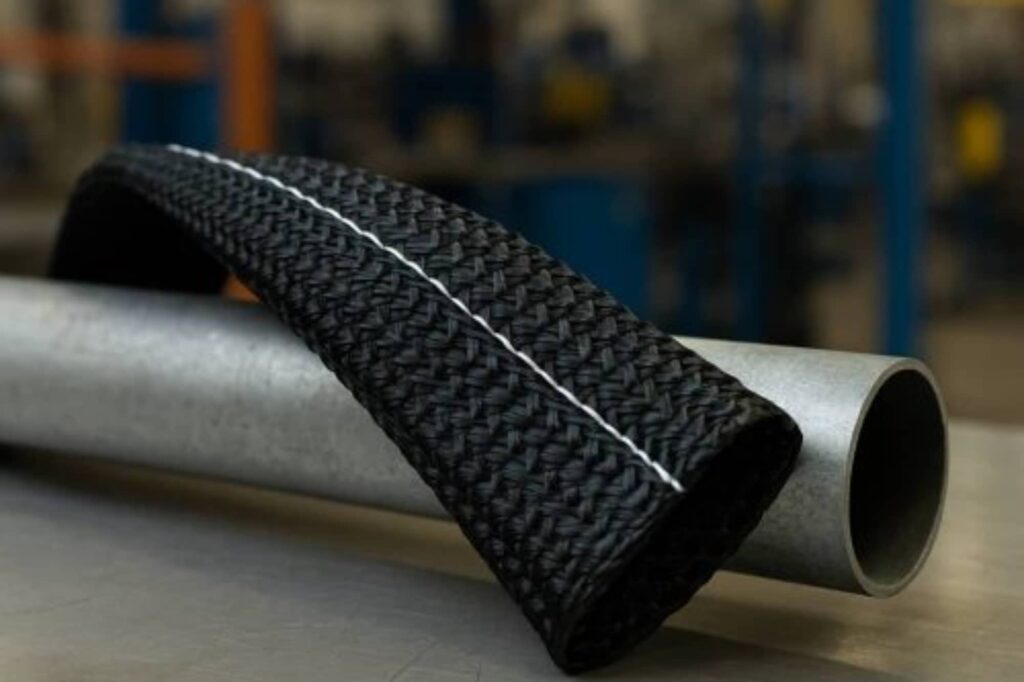
The protective sheath is an essential solution for ensuring the Safety, durability and performance of electrical cables and harnesses in industrial environments. It protects systems against Mechanical, thermal, chemical and environmental constraints, while ensuring their long-term operational efficiency.
Used in the energy, rail, automotive, and industrial sectors, protective sheathing contributes to reduce the risk of failure and extend the service life of electrical installations.
At ADDEV Materials, we support manufacturers in the selection and integration of appropriate protection solutions for their specific constraints, thanks to a wide range of technical ducts.
In an industrial environment, protective sheathing is used for:
It is indispensable in constrained environments.
Comparison:
The protective sheath is a versatile solution.
The protective sleeve is a device designed to enclose cables to provide them with:
It provides a key solution for securing industrial facilities.
La Protective sleeve is used in:
The choice depends on :
The choice depends on the application:
Critique de la performance.
To be taken into account:
Essential for sustainability.
The material must:
Important for reliability.
To check:
Ensures compliance.
We work with partners recognised for their technical expertise:
Expertise in the protection of electrical systems
Technical support
Large portfolio of solutions
Performance-oriented approach
International presence
We help you improve the reliability and durability of your installations.
Each application requires a specific solution.
Our experts can help you with :
Get a quote for a duct
Speak to an expert
Quick response – Dedicated technical support – Tailored solution
This is a solution used to protect cables from external aggressions.
It protects cables from wear, heat and mechanical stress.
The choice depends on the environment and technical constraints.
Heat shrink tubing is more specific, protective sleeving is more versatile.
Yes, that's its main use.
A sheath suitable for thermal and mechanical constraints.
According to the sector (industry, rail, energy...).